




Five Trends Shaping the Future of Defense Manufacturing: Lessons from Eurosatory 2026
As one of the world’s largest defense exhibitions, Eurosatory is about far more than the unveiling of new military equipment. This event offers a unique look at how the global defense industrial base is evolving, and where future opportunities will emerge for manufacturers throughout the supply chain.
As part of the Michigan Economic Development Corporation’s trade mission to Eurosatory 2026, Barron Industries met with defense manufacturers from across Europe and North America while exhibiting alongside other Michigan companies in the U.S. Pavilion.

One message became increasingly clear throughout the week: defense production is becoming more collaborative, more international, and more dependent on advanced manufacturing partners capable of increasing production at speed.
These five trends stood out.
1. U.S. Defense Companies Are Expanding Their European Manufacturing Footprint
The largest American defense contractors are no longer simply exporting products to Europe. They are increasingly producing them there.
Throughout Eurosatory, companies highlighted investments in European manufacturing, engineering, and sustainment capabilities to support NATO modernization programs and improve supply chain resilience.
One of the best examples is the long-term partnership between Lockheed Martin and Rheinmetall.
Originally announced in 2023, the companies continue advancing the Global Mobile Artillery Rocket System (GMARS), combining Lockheed Martin’s precision fires technology with Rheinmetall’s HX tactical truck platform and European manufacturing expertise. GMARS is being marketed to European customers as a next-generation long-range rocket artillery system that is fully compatible with the existing family of Lockheed Martin munitions.
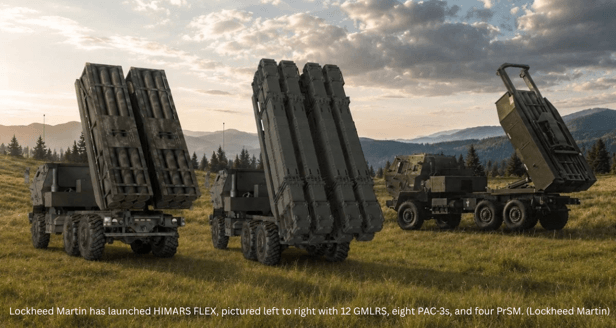
At Eurosatory 2026, Lockheed Martin also introduced HIMARS FLEX, an evolution of the combat-proven HIMARS launcher designed specifically with NATO interoperability in mind. The new launcher is a modular evolution of the M142 High Mobility Artillery Rocket System that introduces a dual-pod launcher configuration capable of carrying double the munitions of the standard single-pod HIMARS. The system demonstrates Lockheed Martin’s continued focus on supporting European customers with capabilities tailored to allied operations.
For suppliers, these programs illustrate an important reality: American defense companies increasingly depend on manufacturing partners across both North America and Europe.
2. European Operations Have Become Critical to U.S. Prime Contractors
General Dynamics provides another example of this evolution.
Through General Dynamics European Land Systems (GDELS), the company has established one of Europe’s largest armored vehicle manufacturing organizations, with facilities in Germany, Spain, Austria, Switzerland, Romania, Denmark, and the Czech Republic.
Rather than operating independently from its U.S. business, GDELS enables General Dynamics to serve European customers through regional engineering, manufacturing, and lifecycle support while leveraging the company’s global technology portfolio.
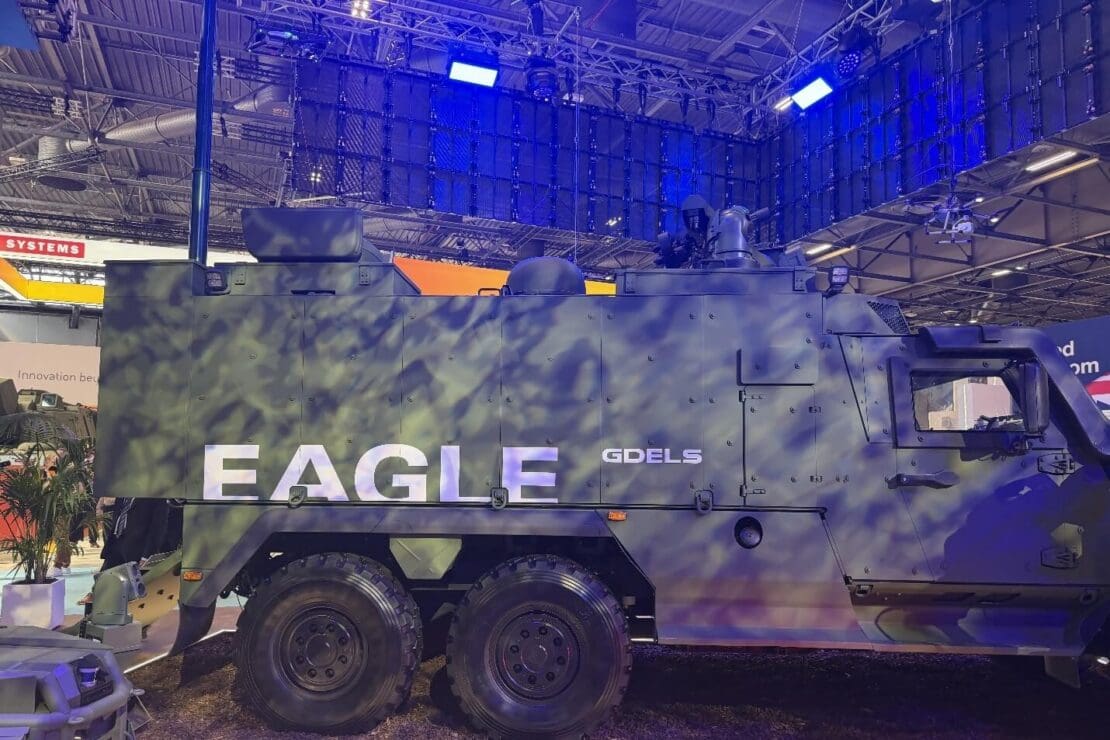
At Eurosatory 2026, GDELS showcased platforms including the PIRANHA family of armored vehicles, the ASCOD platform, and the unmanned BULLFROG vehicle, emphasizing scalable production, digitalization, and future battlefield mobility. The company’s exhibit highlighted its ability to deliver “at scale,” reflecting the industry’s growing emphasis on manufacturing capacity rather than prototype development alone.
For companies already supplying General Dynamics in North America, these investments demonstrate how production opportunities increasingly span both continents.
3. NATO Is Driving a New Era of Industrial Cooperation
Perhaps the most noticeable difference from previous defense exhibitions was the emphasis on industrial cooperation.
Rather than introducing entirely new standalone platforms, manufacturers repeatedly highlighted partnerships designed to accelerate production, expand manufacturing capacity, and improve interoperability among allied nations.
American defense companies are increasingly integrating European suppliers into major weapons programs while European manufacturers continue adopting American technologies and munitions to support NATO standardization. Lockheed Martin’s HIMARS FLEX, unveiled at Eurosatory 2026, put this on full display. Rather than a standalone new platform, the modular launcher is built to share munitions across NATO stockpiles, including GMLRS, PrSM, ATACMS, and PAC-3, so allied forces can standardize on common rounds while tailoring their own loadouts.
This collaborative approach reduces supply chain risk while enabling faster production of equipment needed by allied militaries.
4. Manufacturing Speed Has Become a Strategic Capability
Throughout the exhibition, discussions consistently returned to one question:
How quickly can industry produce?
Whether discussing rocket launchers, armored vehicles, autonomous systems, or missile defense, government officials and industry leaders emphasized production speed alongside technological performance.
This shift is driving investments in:
- Additive manufacturing
- Automation
- Digital engineering
- Vertical integration
- Advanced machining
- Inspection technologies
- Supply chain resilience
Companies capable of reducing lead times while maintaining aerospace-quality standards are becoming increasingly valuable partners.

5. Advanced Manufacturers Will Play an Increasingly Important Role
For Barron Industries, the trends observed at Eurosatory closely align with investments already underway. As a precision investment casting manufacturer, Barron produces the engineered cast components used within advanced defense and aerospace systems, not the complete platforms.
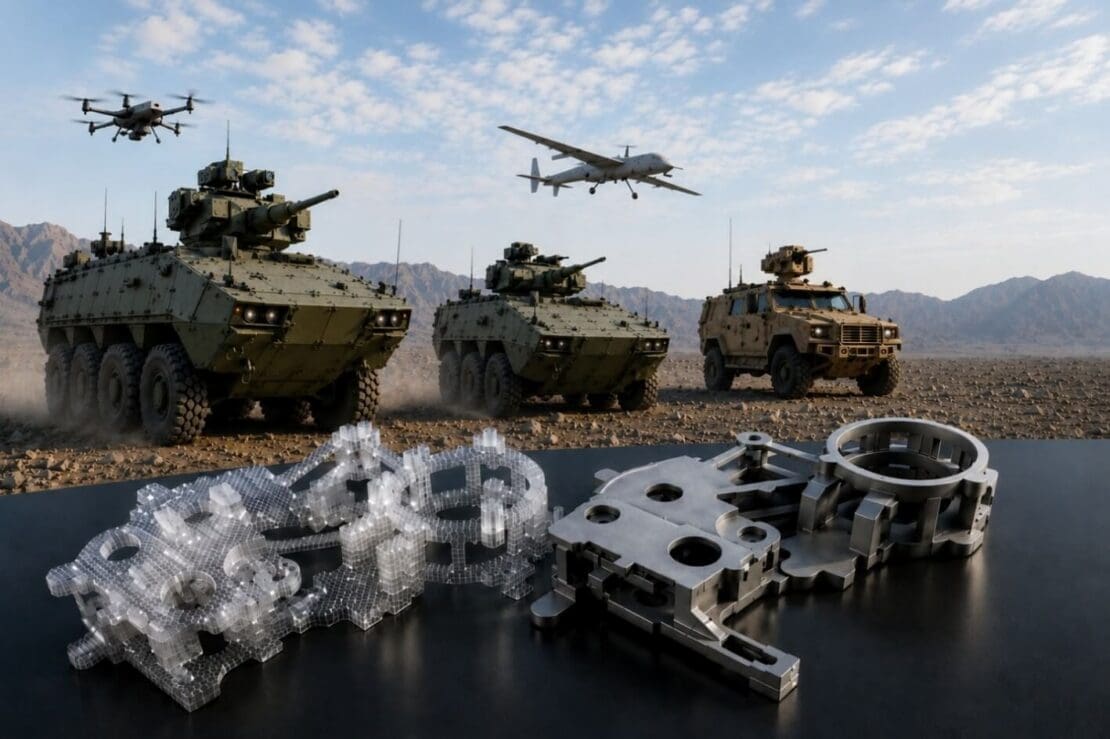
Our Hybrid Additive Investment Casting process reduces prototype and production lead times by eliminating hard tooling through 3D-printed patterns while maintaining the proven metallurgical properties of precision investment castings.
Combined with expanded CNC machining capacity, in-house non-destructive testing, and new vacuum-melt titanium investment casting capabilities coming online later this year, Barron continues building the advanced manufacturing capabilities needed to support next-generation aerospace and defense programs.

The Future of Defense Manufacturing
Eurosatory 2026 demonstrated that the future of defense manufacturing will depend less on individual companies and more on resilient industrial networks.
Programs like GMARS illustrate how U.S. technology and European manufacturing are becoming increasingly integrated. Organizations such as General Dynamics European Land Systems demonstrate how American defense companies are investing in regional manufacturing to better serve allied customers. And new systems like HIMARS FLEX show that future defense platforms are being designed with interoperability, scalability, and rapid production in mind.
For suppliers, the message is equally clear.
As U.S. defense companies continue expanding their European operations, they will increasingly rely on qualified manufacturing partners capable of delivering precision components, reducing production lead times, and supporting resilient transatlantic supply chains.
Barron Industries is proud to be part of Michigan’s aerospace and defense manufacturing ecosystem that combines generations of manufacturing expertise with ongoing investments in automation, advanced machining, materials engineering and workforce development.
For more than 40 years, Barron has supported leading aerospace and defense manufacturers with precision investment castings and fully machined assemblies produced to the industry’s highest quality standards. As we continue expanding our capabilities (including titanium investment casting and the opening of our Aerospace and Defense Advanced Manufacturing Technology Center) we remain committed to helping our customers strengthen the resilient, responsive supply chains that will support the next generation of allied defense programs.