


Rebuilding America’s Metalcasting Industry Through Education: Why the Time Is Now
The U.S. metalcasting industry has shrunk by more than 20% since the mid-2000s, leaving fewer foundries, a diminished skilled workforce, and major supply chain bottlenecks across defense and commercial manufacturing. Yet castings remain essential: aerospace, defense, automotive, energy, and heavy-equipment OEMs continue to depend on high-precision cast components to operate at full capacity.
Rebuilding America’s casting talent pipeline has become a national priority—driven by industry organizations, universities, and support from the Department of War. And the effort could not be more urgent.
America Needs More Metalcasters—Fast
Foundries nationwide face a familiar challenge: not enough people to perform the demanding but rewarding work of metalcasting. From melting and pouring to machining, welding, and assembly, these skilled trades form the backbone of U.S. manufacturing.
Even with advances in composites and additive manufacturing, casting and forging still produce 90% of all durable goods. Without a strong workforce, America’s industrial base—and its national security—are at risk.
METAL Comes to the Rescue
The Metallurgical Engineering Trades Apprenticeship & Learning (METAL) program is one of the most promising national initiatives designed to rebuild the casting and forging workforce. Supported by the Department of War, METAL aims to develop highly skilled, hands-on employees who can thrive in modern foundries.
The program offers:
- K–12 classroom workshops and demonstrations
- University-level bootcamps and hands-on labs
- Registered apprenticeship training for employers
- Internships and early-career pathways
METAL currently partners with seven Foundry Education Foundation (FEF)–endorsed universities across six states.
According to METAL Program Manager Mike Kubacki, the initiative is already delivering strong results. In its first year, METAL enrolled 350 bootcamp participants and 1,100 online learners, with 65% new to casting or forging.
Kubacki notes, “Some engineering students have never even used a drill. After a bootcamp, they finally get to build something with their hands—and they love it.”
Foundries can participate by becoming METAL employers, adopting apprenticeship standards, accessing training curricula, and connecting to METAL’s candidate pipelines.
Industry Associations Step Up to Strengthen the Talent Pipeline
Industry Associations Step Up to Strengthen the Talent Pipeline
Multiple national organizations are investing heavily in training the next generation of metalcasters. Their programs support students from elementary school through college—and provide upskilling opportunities for existing employees.
Investment Casting Institute (ICI)
The ICI offers a robust suite of education and workforce development tools, including:
- Investment Casting Specialist certification
- Technical conferences and training seminars
- Scholarship and internship programs
- Video education libraries
- University outreach
- The new Investment Casting Foundation, focused on hands-on training and apprenticeships
ICI encourages members to host interns, sponsor scholarships, donate equipment, and support certification efforts.
American Foundry Society (AFS) & Foundry Educational Foundation (FEF)
AFS strengthens the industry through:
- The AFS Institute’s instructor-led and online training
- Professional certification
- Industry advocacy
- Templates for apprenticeship development
The FEF maintains its national network of university cast-metal programs, funds laboratories, supports scholarships, and promotes K–12 outreach. AFS and FEF recently partnered to expand free introductory courses for college students.
Steel Founders’ Society of America (SFSA)
SFSA supports steel casting manufacturers through:
- R&D collaboration
- Student competitions
- Workforce development grants
- Recruitment pipelines tied to university programs
How Casting Companies Can Close the Workforce Gap
Foundries across the country can accelerate workforce development by:
- Launching or expanding apprenticeships using METAL and state apprenticeship resources
- Hosting interns and co-op students from FEF-certified schools
- Sponsoring scholarships and donating equipment to the ICI, FEF, and educational partners
- Using AFS Institute and ICI training to standardize skills and support career growth
- Partnering with local schools for manufacturing days, dual-enrollment programs, and hands-on classroom demos
Barron Industries Leads by Example in Workforce Development
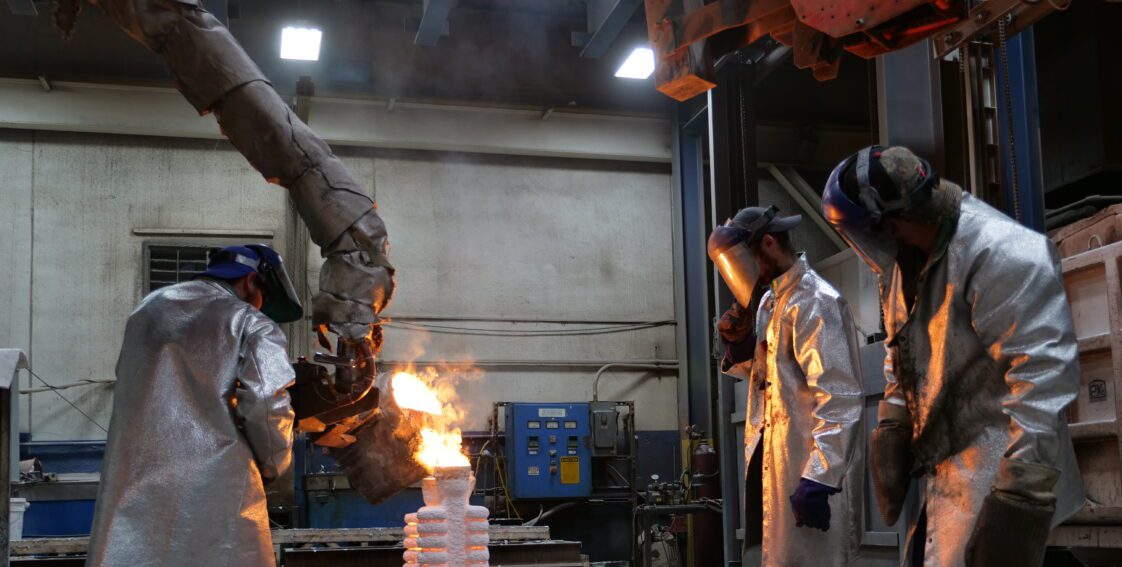
As a turnkey investment casting manufacturer serving the defense, aerospace and other commercial markets, Barron Industries actively supports education and workforce development at every level.
Each year, Barron hosts local high school students for plant tours and hands-on demonstrations. In 2025, the company joined more than 30 Michigan manufacturers in welcoming over 1,000 students during Manufacturing Day, a national effort to:
- Break outdated stereotypes about manufacturing
- Spark interest in high-tech, high-paying careers
- Show students real career pathways that don’t require a four-year degree
Barron Industries was honored to be featured in the 2025 Manufacturing Day Video, highlighting Michigan’s leadership in advanced manufacturing.

Barron has used the ICI’s education kit to demonstrate the investment casting process during Manufacturing Day.
President & CEO Bruce Barron personally encourages high school students to explore manufacturing careers.
“I give students my card and tell them to call when they’re ready to work,” he said. “They can start with no experience and move into skilled trades or engineering—just like many of our long-term employees.”
Barron says the company takes advantage of government assistance programs like the state’s Going PRO Talent Fund to provide partial funding of professional development annually for many new and incumbent employees. The company also has a registered apprenticeship program for CNC machining which allows apprentices to work while attending free college classes.
“We’ll be needing many more machinists when we open our new 20-thousand square foot Aerospace and Defense Advanced Manufacturing Technical Center next year,” said Barron. “We’re responding to the casting industry’s growing needs by investing in new facilities and technology to increase capacity.”
Barron’s workforce development efforts have earned the company numerous accolades and publicity. It was chosen from among 3,000 state businesses to receive the Michigan Works! Business of the Year Award, as well as the prestigious Impact Award.
Barron also takes part in elementary school STEM activities, high school manufacturing curriculum advisory committees, and college pre-apprenticeship programs.
The company partners with the Aerospace Industry Association of Michigan Foundation (AIAMF), which promotes aerospace careers and operates the statewide Michigan Youth Future Flight Challenge for elementary students.
Barron has used the ICI’s education kit to demonstrate the investment casting process during Manufacturing Day.
President & CEO Bruce Barron personally encourages high school students to explore manufacturing careers. “I give students my card and tell them to call when they’re ready to work,” he said. “They can start with no experience and move into skilled trades or engineering—just like many of our long-term employees.”
Barron says the company takes advantage of government assistance programs like the state’s Going PRO Talent Fund to provide partial funding of professional development annually for many new and incumbent employees. The company also has a registered apprenticeship program for CNC machining which allows apprentices to work while attending free college classes.
“We’ll be needing many more machinists when we open our new 20-thousand square foot Aerospace and Defense Advanced Manufacturing Technical Center next year,” said Barron. “We’re responding to the casting industry’s growing needs by investing in new facilities and technology to increase capacity.”
Barron’s workforce development efforts have earned the company numerous accolades and publicity. It was chosen from among 3,000 state businesses to receive the Michigan Works! Business of the Year Award, as well as the prestigious Impact Award.
Barron also takes part in elementary school STEM activities, high school manufacturing curriculum advisory committees, and college pre-apprenticeship programs.
The company partners with the Aerospace Industry Association of Michigan Foundation (AIAMF), which promotes aerospace careers and operates the statewide Michigan Youth Future Flight Challenge for elementary students.
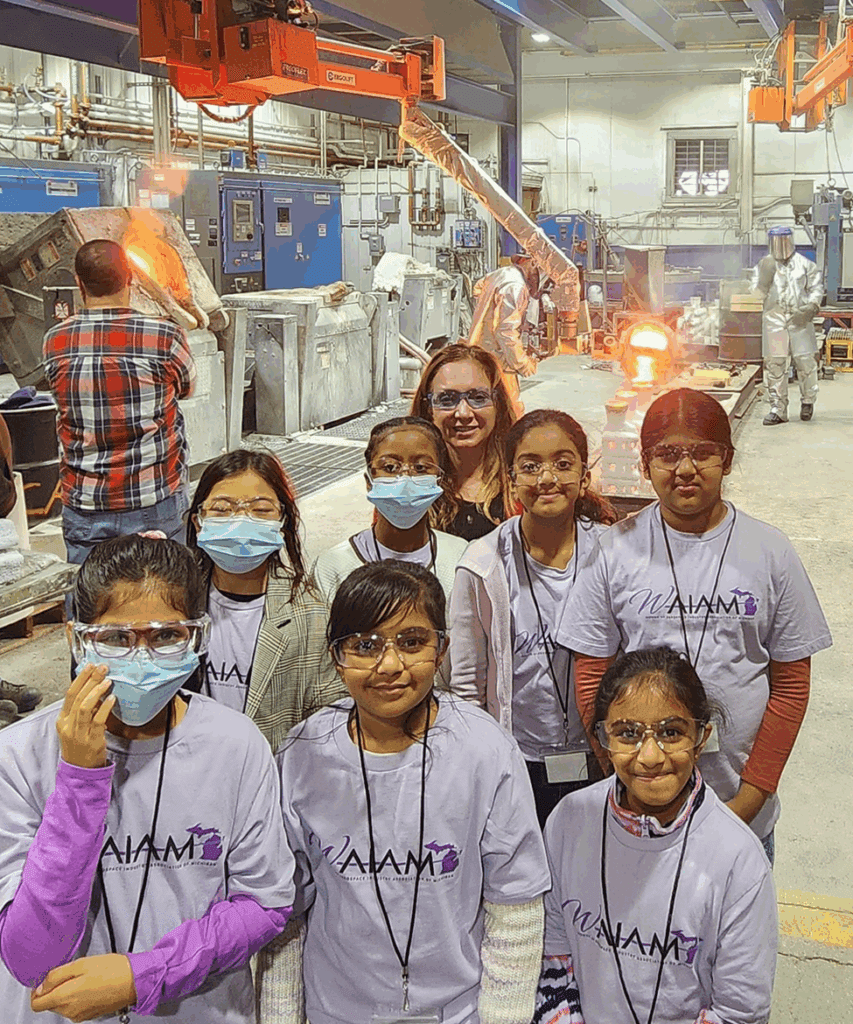
Barron recently hosted the Challenge winners, giving them an inside look at its vertically integrated precision casting process.
As Bruce Barron emphasizes:
“Today’s middle school students are tomorrow’s workforce. America needs them, and we need to inspire them now.”
The Future of Metalcasting Depends on Today’s Investments
America’s casting and forging workforce shortage is no longer just an industry concern—it’s a national security issue. Organizations like METAL, ICI, AFS, FEF, and SFSA are providing powerful solutions, but manufacturers must actively engage.
Through hands-on education, apprenticeships, strategic partnerships, and long-term outreach, companies like Barron Industries are rebuilding the U.S. metalcasting talent pipeline—ensuring the strength of America’s industrial base for decades to come.