


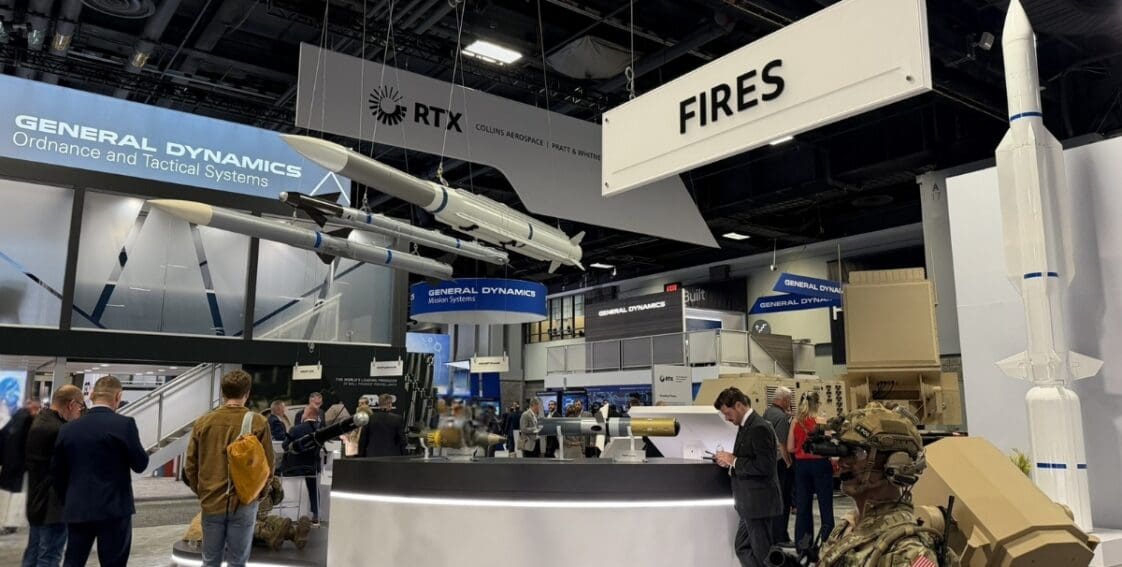
AUSA 2026: Defense Innovation Demands Advanced American Manufacturing
Next-generation defense systems require precision investment castings, shorter lead times, and manufacturing capacity that can grow with demand. Barron Industries is investing to help meet those needs.
The innovations highlighted at AUSA 2026 underscore the growing need for defense investment casting and vertically integrated manufacturing capabilities that help OEMs move rapidly from advanced designs to production. From missile interceptors and autonomous launchers to counter-drone systems and combat vehicles, next-generation defense technologies require precision components, shorter lead times, and manufacturing capacity that can grow with demand.
Behind these engineering achievements is an equally important challenge: producing the components needed to bring them into service—efficiently, affordably, and at scale.
For Barron Industries, that connection has guided 43 years of supporting defense manufacturers. Today, the company is expanding its vertically integrated capabilities to help customers shorten lead times, control costs, and increase production.
Recognizing the Innovators at AUSA 2026
The technologies highlighted during this year’s event reflect advances across missile defense, autonomous systems, and ground combat capabilities:
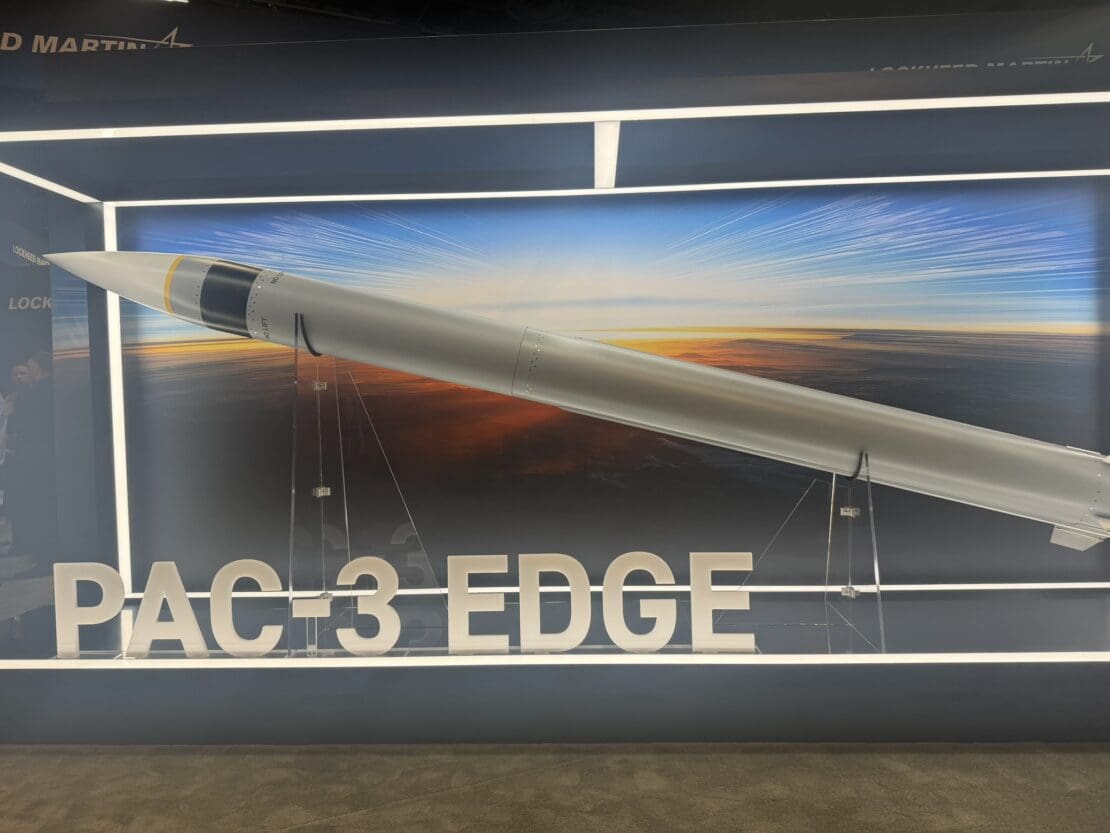
Lockheed Martin’s PAC-3 Edge Interceptor
- Developed for the U.S. Army’s Future Interceptor competition, builds on PAC-3 MSE technology to address increasingly advanced threats.
Anduril Industries’ Steelfin Missile Family
- Uses a modular, reconfigurable design intended to support scalable, high-volume manufacturing.
RTX’s Raytheon DeepFires
- An autonomous, modular missile launcher compatible with Tomahawk and Patriot missiles, designed for offensive and defensive missions.
General Dynamics Land Systems’ F600 Leonidas
- Integrates Epirus’ high-power microwave technology into a mobile platform to counter unmanned aerial systems, including drone swarms.
American Rheinmetall’s Lynx XM30 Combat Vehicle
- Leading candidate in the U.S. Army’s program to replace the aging M2 Bradley Infantry Fighting Vehicle.
We applaud the manufacturers and engineering teams advancing these technologies. Their work underscores the importance of a responsive American supply chain capable of supporting demanding development schedules and growing production requirements.
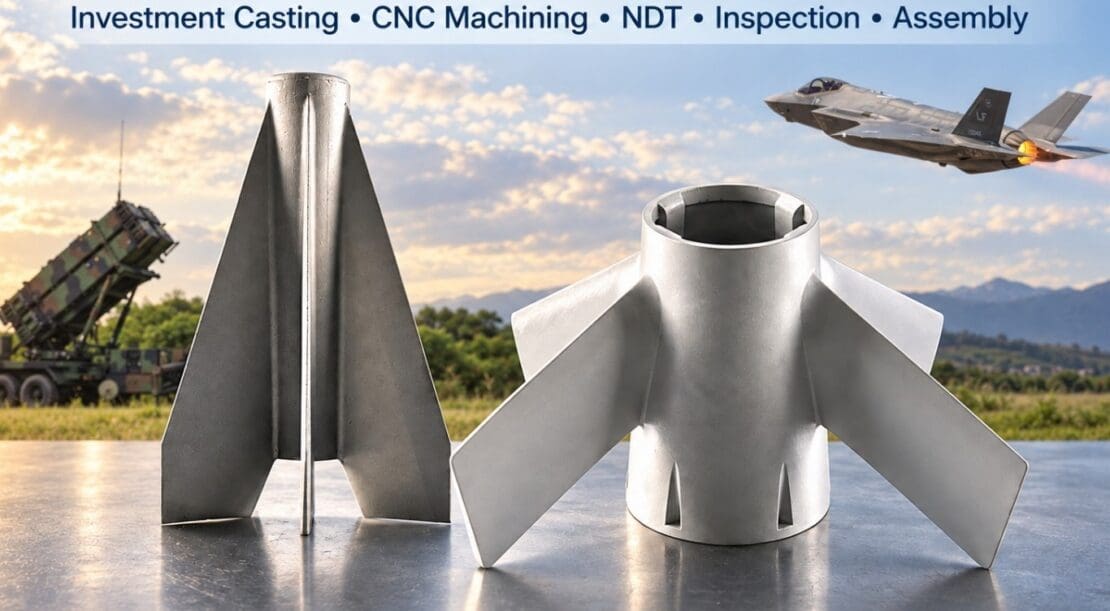
Defense Investment Casting: One Supplier From CAD to Finished Component
Advanced defense programs depend on more than individual manufacturing processes. They need those processes to work together.
Barron combines additive manufacturing, investment casting, CNC machining, testing, nondestructive testing (NDT), inspection, and assembly through one vertically integrated manufacturing partner.
That means customers can work with one supplier—from CAD data to a cast, machined, assembled, and tested metal component.
Bringing these capabilities together shortens lead times by reducing transportation between suppliers, scheduling delays, and repeated handoffs. Casting, machining, and quality teams can coordinate requirements early, address manufacturing questions quickly, and keep components moving through production.
This integrated approach can also reduce costs by limiting freight, administrative work, and the coordination required to manage multiple vendors. Early collaboration helps identify opportunities to improve cast geometry, reduce machining, and avoid unnecessary rework.
For customers, the result is a more direct path from design to delivery, with one manufacturing partner accountable for the finished cast and assembled component.
Rapid Defense Production With Hybrid Additive Casting
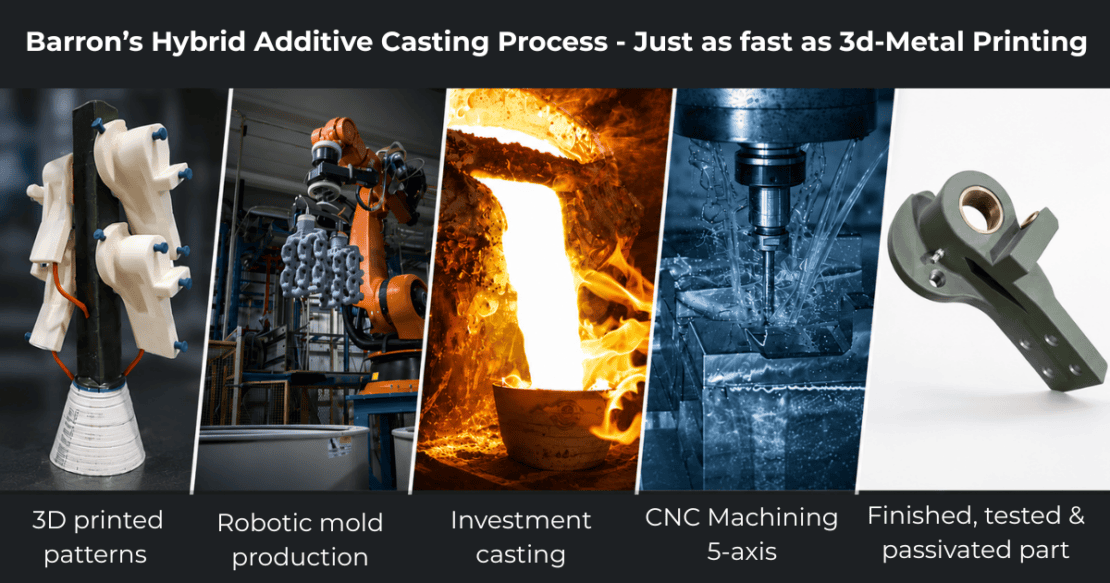
Barron’s Hybrid Additive Investment Casting process combines 3D-printed patterns with established investment casting methods.
By eliminating the need for hard tooling during initial development, this approach shortens the path from CAD data to metal components and reduce upfront tooling costs. Engineering teams also gain flexibility to evaluate designs and incorporate changes before committing to production tooling.
This approach is particularly valuable for prototypes, low-volume requirements, and programs with complex designs. Combined with Barron’s machining, testing, and assembly capabilities, it helps customers move from development toward production with fewer supplier handoffs.
Aluminum Castings for Lightweight, Thin-Walled Components
Material selection is another important part of meeting defense performance and production requirements.
Barron pours a range of aluminum casting alloys for lightweight, thin-walled components, helping customers balance weight, strength, and complex geometry.
Investment casting allows intricate features to be incorporated into near-net-shape aluminum components. Where the design permits, this can reduce material usage, machining requirements, and the need to join multiple pieces.
Barron’s casting and machining teams work together to evaluate wall thicknesses, tolerances, and finishing requirements. Testing, NDT, and dimensional inspection then help verify that components meet the customer’s specifications.
By combining aluminum casting expertise with integrated downstream operations, Barron supports lightweight designs through delivery of finished, inspected hardware.
Investing in Capacity to Grow with demand for Defense Castings
Barron’s $10 million Aerospace & Defense Advanced Manufacturing Technology Center—ADAMTeC—investment is designed to strengthen its ability to support expanding customer requirements.
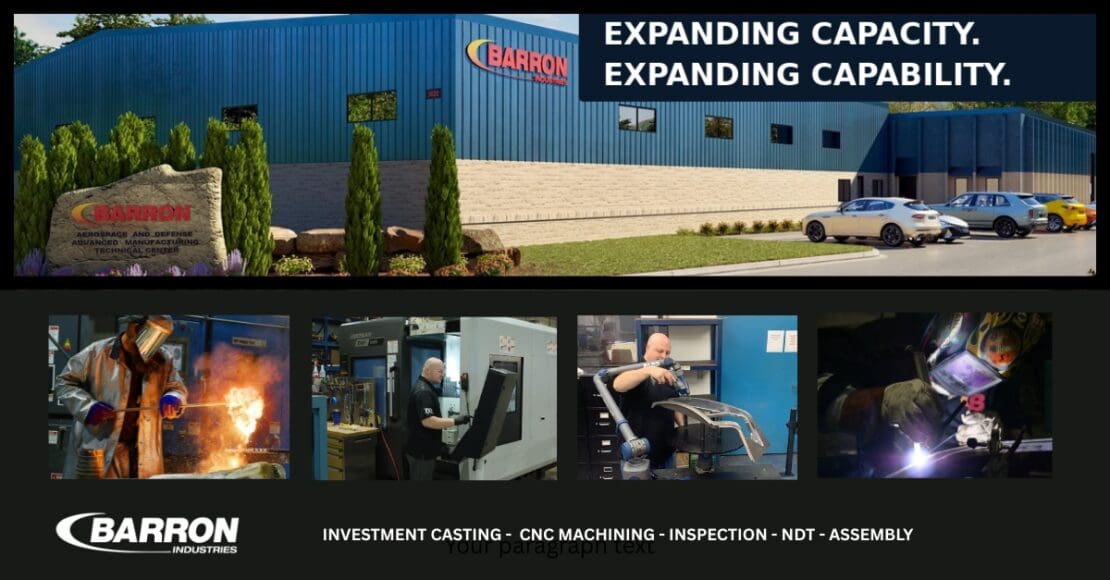
The new 20,000-square-foot facility in Oxford Township, Michigan, will expand machining, inspection, NDT, and assembly operations. The investment is expected to add approximately $25 million in production capacity and create approximately 50 skilled manufacturing jobs.
Barron is also adding in-house titanium investment casting capabilities, broadening its ability to support applications requiring high strength, low weight, and corrosion resistance. This expansion builds on the company’s experience producing precision components in aluminum, steels, stainless steels, and other demanding alloys.
Together, these investments strengthen Barron’s ability to support customers from initial development through growing production volumes.
Supporting the Future of Defense Manufacturing
The innovations highlighted at AUSA reinforce a clear manufacturing need: precision components delivered through efficient processes and dependable domestic capacity.
For 43 years, Barron Industries has supported defense manufacturers with precision investment castings and CNC-machined components. Today, its integrated capabilities and expansion investments are creating a faster, more coordinated path from CAD data to finished metal hardware.
Your innovation. Our Precision. America’s Defense
Contact Barron Industries to discuss how our additive manufacturing, investment casting, machining, testing, NDT, and assembly capabilities can help shorten lead times and reduce costs for your next defense program.