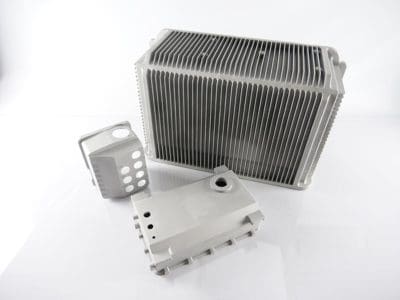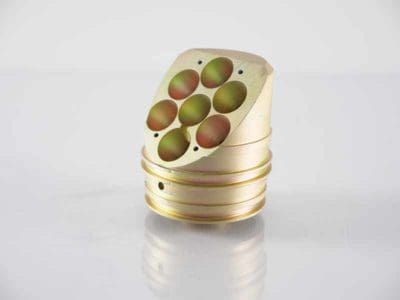
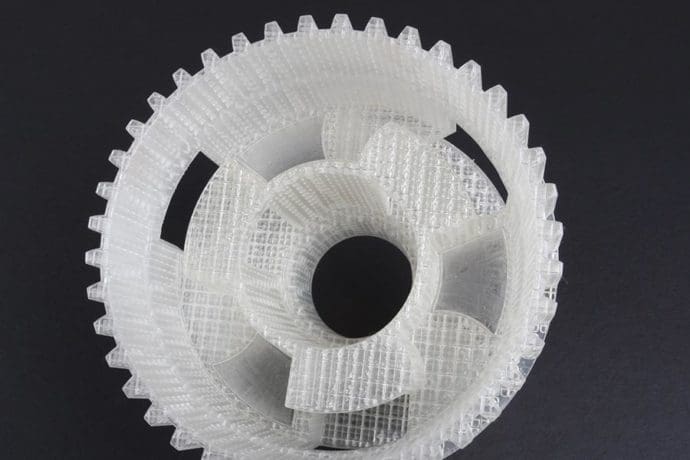
By combining precision investment casting with the latest additive manufacturing technologies, our hybrid additive casting process is significantly more cost-effective than 3D metal printing while delivering parts just as quickly. At Barron Industries, we use CAD data to 3D print patterns for investment casting, allowing us to produce hybrid additive castings in the same timeframe—but at a fraction of the cost—compared to 3D printing and finishing a metal part. Additionally, rapid casting with additive manufacturing techniques is far more efficient and economical than machining prototypes from bar stock or fabricating them as complex weldments.
By 3D printing patterns and eliminating tooling, Barron accelerates production while maintaining material integrity. Combined with our fully integrated in-house machining , NDT and assembly, our team executes a highly agile production schedule.
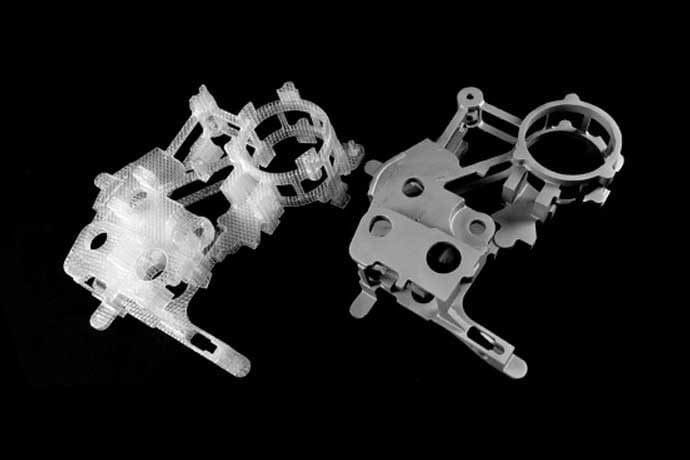
Unlike 3D-printed metal parts, which currently lack standardized material certifications, investment castings can be produced to meet aerospace and defense standards for mechanical properties, ensuring reliability and performance.
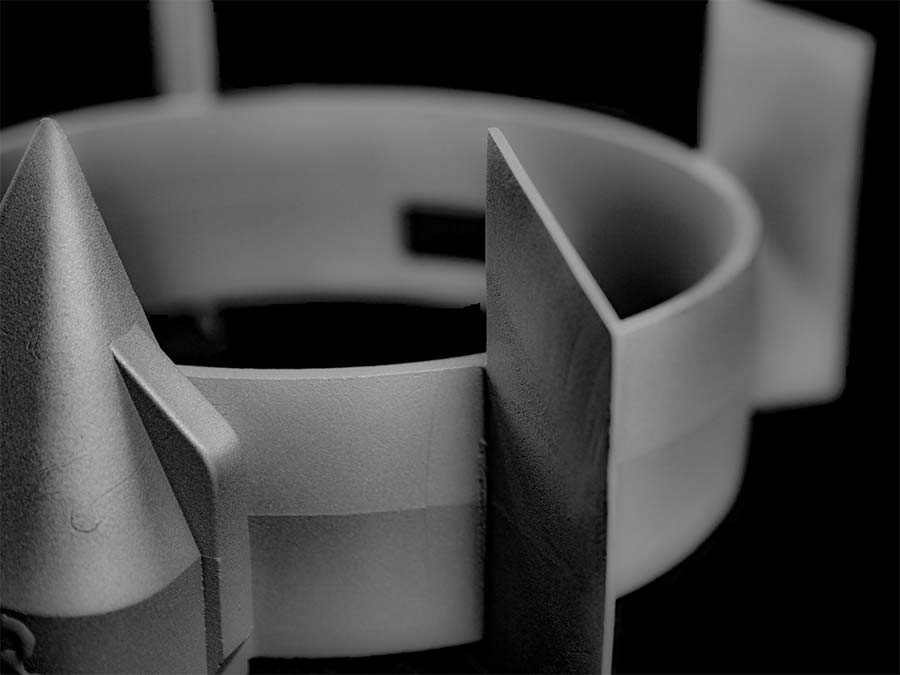
When a longtime defense customer needed fast production of a critical three-piece hinge assembly, time was non-negotiable. Engineers evaluated multiple options—including machining from solid and 3D metal printing—but neither could meet the aggressive timeline, cost targets, and certification requirements demanded by the U.S. Department of Defense. Working from customer-supplied CAD data, Barron optimized the design for casting and delivered fully finished, heat-treated, machined, assembled, passivated, and CMM-inspected components in JUST SIX WEEKS!

Convert the math data or three-dimensional model (3D) into a solid model casting file and run solidification modeling.
Build and cure the hybrid additive pattern, via a 3D printer (Projet) or Stereolithography (SLA) technology.
Inspect the hybrid additive pattern to ensure it meets both surface finish and dimensional specifications.
Manufacture and deliver the functional hybrid additive investment casting.
Speak to one of our experts today to learn more about our custom casting solutions.