



Federal, state funding boost Oakland Co. apprentice opportunities
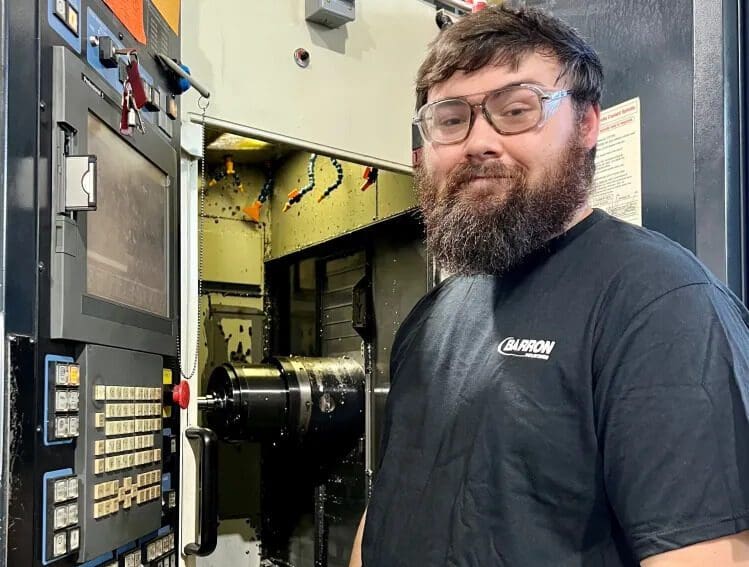
Ryan Walther chose a job similar to many of his relatives: production work in a machine shop. After he started working for Oxford-based Barron Industries on May 15, his focus changed with an opportunity that he hopes will become his career.
“I got offered the apprenticeship when they did my 90-day evaluation,” the 25-year-old said. “I took full advantage of that.”
In January, he’ll start classes at Mott Community College. The goal of the U.S. Navy veteran is to get advanced certification as a computer numerical control (CNC) machinist.
Walther said earning $19 an hour as an apprentice is easy money, adding, “anybody can pick it up if they apply themselves.”
He earned just under $12 an hour in his first job and at Barron’s he was earning $17.50 an hour until he got the raise that came with his apprenticeship.
Walther now sees a clear career path.
“It’s cool, how they set up each section and how I grow – the sky’s the limit,” he said. ”The pay caps out at $27. You stay the course, do your best, stay motivated and great things will come.”
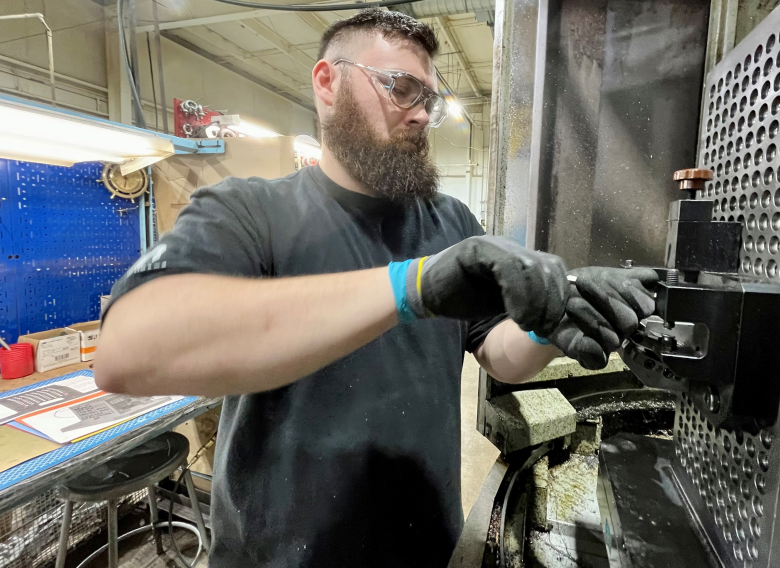
Employees at Barron, a 100-year-old global supplier of precision-machined castings and assemblies, are encouraged to recruit family members for unskilled to engineering positions.
Barron was honored this year with a Michigan Works! Impact Award and named the Business of the Year by Oakland County’s Michigan Works! Office. In recent years, Barron joined Oakland County and Automation Alley in the Project DIAMOND (Distributed Independent and Agile Manufacturing On Demand) network.
Among Barron’s 80 employees, 30% have been with the company for 10 years or longer. The short-term goal is to replace retiring workers while growing the company’s workforce by 15%, said Lissa Barron, company spokesperson. New employees will get on-the-job training and be considered for apprenticeships and other professional development with support from Oakland County’s Michigan Works.
“The obvious benefit to the company is training our people,” Barron said. “Their certification is portable so if they get higher-paying jobs, that’s a win-win. We’re willing to take that risk to get the right person for each job.”
Barron partnered with Oakland County’s “Advantage: Apprenticeship” program in 2022. Walther is the second employee accepted into the program.
Sarah Hug is one of Oakland County Michigan Works’ business services representatives. Her job includes working with just over two dozen companies, helping them develop apprenticeship plans.
Depending on the type of work an apprenticeship can last one to six years, she said, with other variables including the number of hours for on-the-job training and classroom hours, what school they choose to attend. Some companies provide paid study time, others allow flexible start or end times.

Each year of an apprenticeship requires 2,000 hours on the job and 144 hours of school, Hug said. Because apprentices work full time, they get benefits, including vacation time
“Each apprenticeship has a standard,” Hug said.
Barron officials worked with the county to meet U.S. Dept. of Labor standards for a CNC machinist apprentice, which require 8,000 hours of work – that’s close to four years on the job, including 576 hours of classroom-based training.
Walther’s class work will include math, blue-print reading and metallurgy. On the job, he’s learning workplace safety and other standards as well as advanced programming of the machines.
Barron said supporting an apprentice is a partnership with the county because the company pays Walther his salary and full benefits, with support from grants administered by the county.
Jennifer Llewellyn, Oakland County Michigan Works’ director, said 2023 has been a transformational year for the county’s economic development efforts.
This year, the county has added 15 registered apprenticeship programs for a total of 88, supporting software engineers, accountants, childcare providers, telecom technicians, electric charging station installers, information technology help desk technicians and water plant operators.
Ensuring that 80% of the county’s adult residents get a 2- or 4-year college degree or certified training certificate by 2030 is what Llewellyn called “the north star of our office” because it will lead to more people earning a living wage. Walther will earn certifications through his apprenticeship.
“We’ve increased the number of people registering for apprenticeships by developing strategic partnerships and getting federal and state funds,” Llewellyn said, adding that the latest effort is getting her office certified as an intermediary to help more businesses qualify for federally approved apprenticeship programs.
SUPPORTING APPRENTICES
Helping small businesses meet and maintain apprenticeship standards is one piece of an employment puzzle of the county’s workforce development efforts, which include support for workers who may need transportation or daycare as they pursue jobs and education that will change their lives.
Llewellyn said one ongoing challenge is getting the word out about how much help is available to people who may be looking to advance in their current field or make a career change.
“We have a tremendous number of resources available for young adults, parents with some college but no degree and others. It’s often a perception issue,” Llewellyn said. “If you’re wondering what Oakland County Michigan Works can do for you, give us a call. We can see what funding is available for tuition, what opportunities we have that will help you.”
The county’s Michigan Works office received $1.5 million in American Rescue Plan funding in 2021 to remove barriers to employment, helping people get jobs or keep a job. Some of that support included helping people with daycare, utility bills or avoiding eviction. The funding can also help new employees afford uniforms or such necessities as proper safety equipment like footwear.
“It’s hard to focus at work when you have all these other challenges,” she said. “We currently have proposals for additional funding for 2026. Our office has been around for 25 years and we’ve aggressively pursued federal and state dollars to fill gaps.”
PLANNING THE FUTURE WORKFORCE
Another focus is finding new jobs, such as in the electric vehicle industry.
“We’re preparing the next generation of workers and that may include re-training existing employees to avert layoffs,” she said.
Her office also works with people considering career changes. That’s another area where apprenticeships make sense.
“People often think of apprenticeships as plumbers, pipefitters and operating engineers but they also include teachers, accountants, EV charging station technicians, software developers,” she said. “Employers out there struggling to find talent and looking for new creative ways to get it should consider apprenticeships. It’s the best mode for learning and earning and we can help companies through that process of creating their own apprenticeship program.”
Next year, Llewellyn’s office will have $500,000 available for employers who want to join the Advantage: Apprenticeship program, with more coming through the state’s Going PRO Talent Fund. It recently issued 2024 grants to dozens of Oakland County businesses.
Original The Oakland Press Article: https://www.theoaklandpress.com/2023/12/26/federal-state-funding-boost-oakland-co-apprentice-opportunities/